
Core update: what to assess and how long to wait
What to do in the first days after a Google core update, how to honestly assess the real impact, and how long it usually takes for traffic to recover.
highlights
- Core updates broadly reassess quality and relevance, with no specific target against a site.
- Confirm the drop coincides with the update's rollout window before treating it as the confirmed cause.
- Wait for the rollout to finish, plus one week of stable data, before acting or changing the site.
- Recovery has no guaranteed timeline and depends on real improvements, not panic adjustments.
A core update is a broad change to Google's ranking system, which reassesses quality and relevance the way the search engine understands them at that moment. According to Google's official documentation, these updates have no target: there is no specific site being singled out on purpose. What exists is a general reassessment in which some content rises and some falls, because the measuring stick changed.
This definition sounds abstract until you are on the other side of the drop. In practice, what matters is knowing what to do in the first days, what to assess before changing anything, and what timeline is reasonable to expect.
Confirm first: does the drop match the update's date?
Before treating the drop as the result of a core update, confirm the dates line up. Google announces the start and end of each core update's rollout, usually through the Search Status Dashboard. If your drop started within that window (or a few days after, since the rollout can take up to two weeks to complete, according to Google), the core update hypothesis gains strength.
If the drop started well before the announcement or long after the rollout ended, it is worth reviewing the other hypotheses in the guide to diagnosing traffic drops before assuming it was the update.
What to do in the first week
Google's official guidance is to wait for the full rollout to finish, plus a full week, before drawing conclusions from Search Console. Position changes during the rollout itself can be temporary, because the system is still adjusting.
In that first week, the work is observation, not action:
- Document the exact date the drop started, as precisely as possible.
- Identify which pages, templates, or sections of the site were most affected.
- List the queries that lost position, and separate the ones that lost a little from the ones that lost a lot.
- Resist the urge to rewrite content or change structure at this stage. There is not enough data yet to know what needs to change.
In practice: touching the site during the rollout is the most efficient way to never understand what actually caused (or fixed) the drop. Wait for the update to finish before acting.
What to assess after the rollout ends
With the update finished and a week of stable data, compare the current week to the week before the rollout started, not to the monthly average. This direct comparison shows the real size of the impact.
After measuring the size, Google recommends an honest self assessment of the site as a whole, based on the criteria for helpful and trustworthy content (E-E-A-T: experience, expertise, authoritativeness, and trustworthiness). Practical points to check:
- Do the pages that lost position offer something a better ranked competitor does not?
- Does the content show evidence of real experience (who wrote it, why that person is trustworthy on the topic)?
- Is there thin, outdated, or redundant content in the same affected sections?
- Could the page experience (speed, excessive ads, confusing navigation) be competing with the content for the user's attention?
If the pattern that shows up is broad loss of editorial traffic, it is worth considering whether the case is actually more specific to content quality than to a generic core update. This scenario gets deeper treatment in Helpful Content: what we learned about recovery.
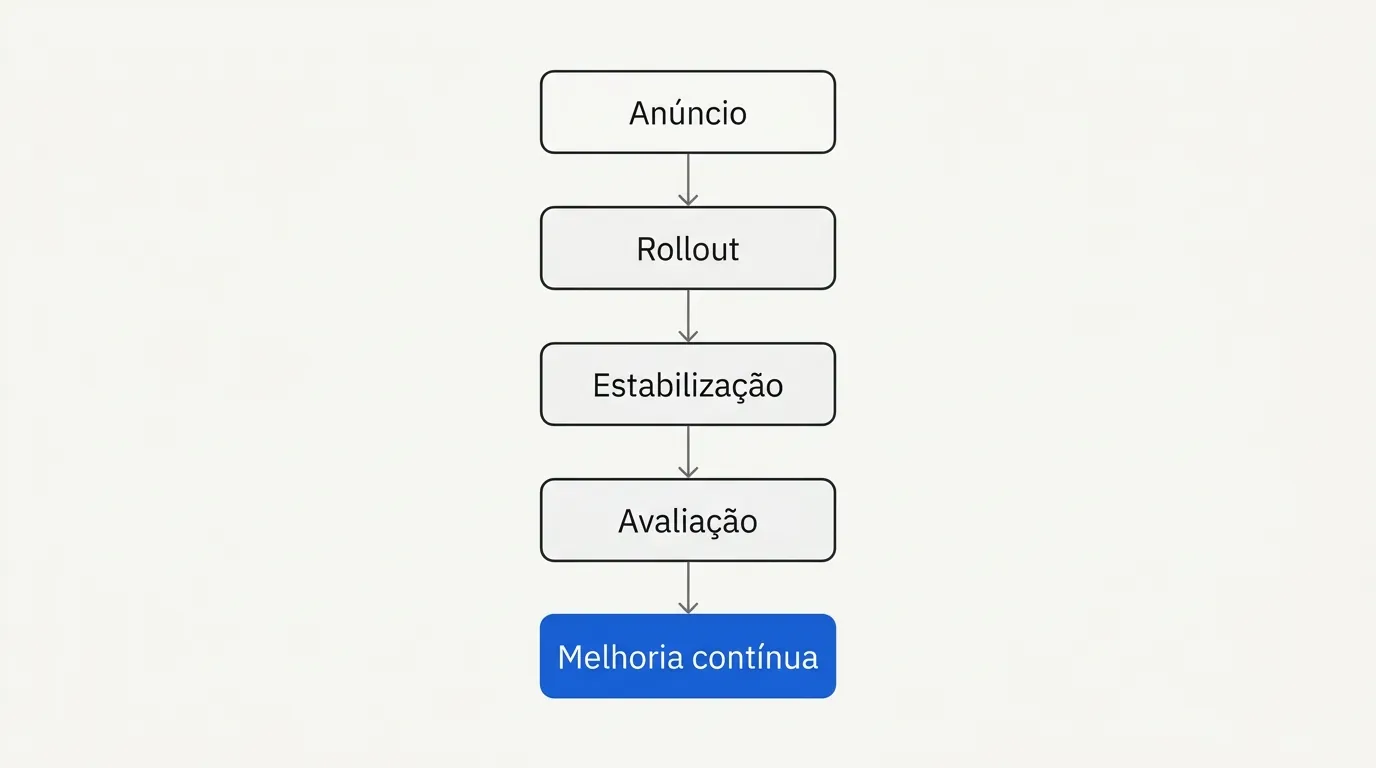
How long it takes to recover
It is important to be direct here: there is no guaranteed timeline, and most guides that promise an exact number are oversimplifying. What can be said with reasonable confidence is that recovery from a core update is not usually immediate, and that Google recommends making real, lasting improvements to the site, not panic adjustments, because superficial changes tend not to produce an effect until the next relevant system reassessment.
In practice, the work done today may take a while to show up in traffic. According to Google's documentation on core updates, some changes take effect within a few days, but the systems can take several months to learn and confirm that the site as a whole has started producing helpful and trustworthy content. If months pass with no noticeable change, the improvement may only show up at the next core update. Google itself notes there is no guarantee of impact, because search positions are not fixed.
What is not worth doing
- Rewriting entire pages just because it "feels like the right thing to do", without tying the change to a specific quality criterion.
- Switching agencies or CMS as an immediate reaction to the update.
- Comparing your site to competitors that rose without considering that they may have years of accumulated work on the same points you are trying to fix now.
- Requesting reconsideration: a core update is algorithmic and has no associated reconsideration request. If you are not sure of the difference, see manual action and the reconsideration request.
The first move I would make is to cross the date of the most recent update, on Google's official calendar, with the date the drop started. If they match, the first week is for documenting and segmenting the impact, without touching the site. If they do not match, it is worth considering the other causes in My traffic dropped: a diagnostic guide to Google traffic drops.

Lucas Cassapula
Partner & Head of SEO at Wesearch and Co-founder of Mentionflow
I am a partner at Wesearch and co-founder of Mentionflow. I have worked with SEO for almost 10 years. I am a data-driven geek who is always testing hypotheses, looking for patterns and turning ideas into products. I share studies, experiments and automations focused on SEO and GEO.